How to Sell Clothes Online in the UK: Platforms, Pricing and What Actually Shifts
The single biggest mistake new clothing sellers make is pricing items without factoring in postage, a £6 jumper sold for £5 with £3.99 postage included is a loss before you've touched a profit. To sell clothes profitably, you need the right platform, honest pricing, and photographs that do the selling for you.
This guide covers everything: where to list, how to price, what sells, and how to avoid the postage trap that catches most beginners.
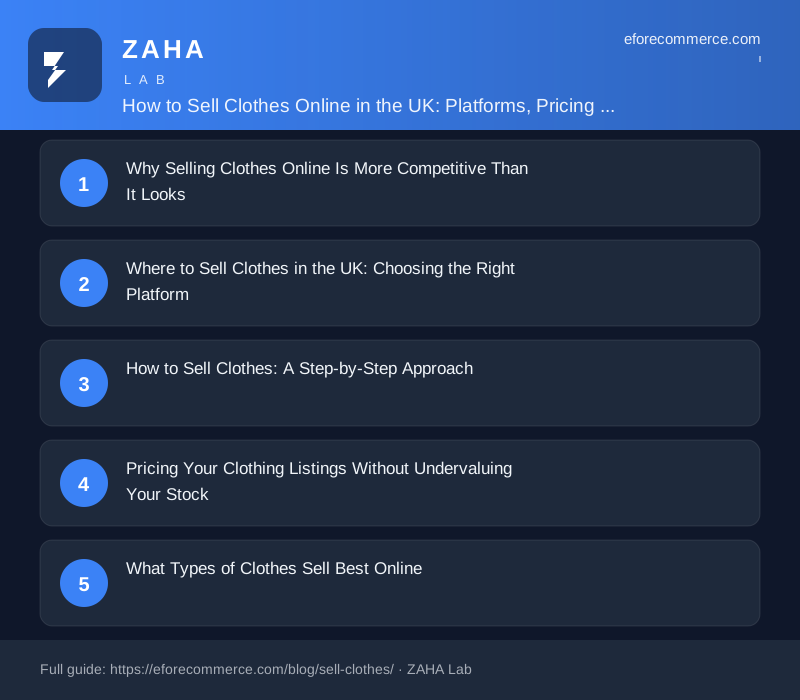
Why Selling Clothes Online Is More Competitive Than It Looks
Clothing is the single largest category on most UK resale platforms. That's both an opportunity and a warning. Buyers are spoilt for choice, which means a poorly lit photograph or a vague description will simply be scrolled past in favour of a better-presented listing two rows down.
The sellers who do well are not necessarily the ones with the best stock, they're the ones who treat each listing like a mini product page. Think measurements, condition notes, washing instructions, and a clear hero image. That attention to detail is what separates listings that sell within 48 hours from ones that sit for months.
Where to Sell Clothes in the UK: Choosing the Right Platform
There is no single best place to sell clothes online in the UK. The right platform depends on what you're selling, how much time you want to invest, and whether you're clearing out a wardrobe or running an ongoing business.
- Vinted, No selling fees for the seller (buyers pay a protection fee), which makes it strong for lower-priced everyday items. Best for high-street brands, kidswear, and casual clothing priced between £3 and £30. The audience is large and deal-focused.
- eBay, The widest reach of any UK resale platform. Auction format can drive competitive prices on branded or vintage pieces. Fixed-price listings work better for consistent stock. Fees currently run at around 12–13% of the final sale value including postage.
- Depop, Skews younger and trends-focused. Strong for vintage, streetwear, and anything with a distinct aesthetic. Less effective for generic high-street items. The social feed mechanic means visibility is tied to how actively you engage.
- ASOS Marketplace, Best suited to vintage or independent boutique sellers who can commit to a curated range. There's a monthly subscription fee, so it only makes sense if you have consistent volume.
- Facebook Marketplace, Useful for local, collection-only sales where you want to avoid postage entirely. Good for bulkier items or bundles that would be uneconomical to ship.
- Your own website, Worth building once you have a defined niche and repeat buyers. Platforms keep a percentage of every sale; your own site doesn't. The tradeoff is that you must drive your own traffic.
For most people starting out, the practical advice is to list on two platforms simultaneously, Vinted for volume and speed, eBay for higher-value or branded pieces.
How to Sell Clothes: A Step-by-Step Approach
The process for turning a garment into a sale follows a consistent pattern regardless of which platform you use.
Step one: sort and grade. Before photographing anything, go through your stock and sort by condition. Items with visible stains, pulls, or fading need to be priced accordingly or discarded, a negative review for misrepresented condition will cost you far more than one bad listing is worth.
Step two: photograph properly. Natural light from a window, a plain white or neutral wall, and a clean floor or flat surface are enough to produce competitive images. Photograph flat-lay and on-hanger. For better conversions, especially on Depop, a styled flat-lay or on-body shot typically outperforms a hanger shot. Aim for five to eight photos per item: front, back, inside label, any damage or wear, and a close-up of the fabric if the texture is a selling point.
Step three: write a useful description. Include brand, size, actual measurements (chest, length, waist where relevant), material, and condition. Don't assume the buyer knows what "S" means in brand X, actual centimetre measurements reduce returns and build trust.
Step four: price with postage already decided. Before you set a price, know your postage cost. Royal Mail's standard large letter rate covers many lighter items; heavier knitwear or jeans typically need a small parcel service. Use a kitchen scale. An unweighed parcel sent under the wrong postage class is a refunded sale and a wasted label.
Step five: list at the right time. Engagement on resale platforms peaks on Sunday evenings and Thursday evenings for the UK market. If your platform re-sorts listings by recency, timing your upload matters more than you'd expect.
Pricing Your Clothing Listings Without Undervaluing Your Stock
A common starting point is to price at roughly 25–40% of the original retail price for items in good used condition, adjusting upward for sought-after brands and downward for common high-street pieces with no particular demand. Items still with tags can reasonably sit at 50–60% of retail.
Check completed sales (not just active listings) on eBay's sold filter to find what items are actually clearing at, not what sellers are hoping for. Depop's search also shows sold items. Those figures are your real market data.
Bundle pricing is effective on Vinted in particular. A single £4 item may attract no interest; a bundle of five items for £15 with postage included gives the buyer a perceived deal and justifies the postage cost for them. Offer bundle discounts proactively in your listing description.
What Types of Clothes Sell Best Online
Some categories move significantly faster than others. Based on consistent platform trends in the UK market:
- Branded high-street, Zara, Mango, & Other Stories, and similar mid-market brands with recognisable names sell reliably because buyers search by brand.
- Vintage and Y2K, Anything with a retro aesthetic continues to perform, particularly 1990s and early 2000s pieces. Buyers actively search by decade.
- Kidswear, High churn (children grow quickly), so there's constant supply and constant demand. Outgrown bundles by age and size sell quickly.
- Activewear, Branded gym and running wear holds value well, particularly Lululemon, Gymshark, and comparable names.
- Wedding guest and occasion wear, Items worn once and professionally cleaned command reasonable prices relative to their original cost.
- Designer and premium labels, Higher reward but also higher buyer scrutiny. Authentication questions are common; clear label photographs and honest condition notes are essential.
Generic unbranded high-street clothing from Primark or similar value retailers is the hardest to shift, there's no brand search driving buyers to it, and condition has to be near-perfect to justify any price above £2–3.
Postage and Packaging: Where Profit Disappears
Postage is where most new clothing sellers lose money without realising it. Here is a working framework for UK sales:
Items under 100g (lightweight tops, scarves, thin T-shirts) can go as a large letter via Royal Mail at a fraction of a small parcel rate, weigh everything and check dimensions carefully. A standard large letter must be no more than 25mm thick, 353mm long, and 250mm wide.
Denim, knitwear, and coats typically need a small or medium parcel rate. Factor in packaging material too, even recycled bags and boxes carry a cost per item. A rough per-item packaging budget of 15–30p is realistic for lower-volume sellers buying recycled materials.
Tracked postage adds cost but reduces disputes significantly. For any item priced over £15, tracked shipping is worth including in your pricing model, a successful "item not received" claim on an untracked parcel wipes the profit from the sale entirely.
Scaling From Occasional Selling to a Clothing Resale Business
Once you've cleared your own wardrobe and understand how each platform works, the logical next step is sourcing stock externally. The most common entry points in the UK are:
Charity shops and car boot sales, The classic sourcing method. Margins are inconsistent and the time investment per item is high, but overheads are low. Best suited to sellers with a specific niche who know exactly what they're looking for before they walk in.
Wholesale clothing bundles, Various UK wholesalers supply mixed-grade bundles by weight, typically priced at £1–3 per kilo. Quality is variable and unpredictable, but the per-item cost is low enough to absorb some unsellable stock.
Retail arbitrage, Buying end-of-line or sale stock from physical retailers and reselling online. This requires consistent buying discipline and an understanding of demand before you commit to stock.
The operational shift that matters most when scaling is batching. Photographing, listing, and dispatching in batches rather than ad hoc reduces the time per item substantially. One half-day session per week processing 20 items is far more efficient than daily one-off listings.
Frequently Asked Questions
How do I sell clothes online for the first time in the UK?
Start with what you already own, items you no longer wear are stock with zero sourcing cost. Create accounts on Vinted and eBay, photograph 10 items in natural light against a plain background, write descriptions that include brand, size, measurements, and condition, and price by checking what similar items have actually sold for (not just what's listed). Dispatch promptly and communicate clearly with buyers. Your first few sales are a learning process; don't expect perfection from the first batch.
What is the best platform to sell clothes in the UK?
There is no single best answer, it depends on your stock. Vinted works well for everyday and high-street items because buyers pay the platform fee rather than sellers. eBay gives access to the widest audience and handles both auction and fixed-price formats. Depop suits vintage and trend-led pieces. Most active sellers list on at least two platforms to maximise reach; cross-listing the same item takes minutes once your description and photos are prepared.
How do I price second-hand clothes to actually sell?
Use eBay's sold listings filter to find what comparable items have cleared at, not what sellers are asking, but what buyers have actually paid. As a rough guide, good-condition used clothing from recognisable brands typically sells at 25–40% of its original retail price; items with tags still attached can reach 50–60%. Always calculate your postage cost before setting a price, not after. A sale that doesn't cover postage plus platform fees is not a sale, it's a cost.
Disclosure: this post contains affiliate links. If you join through one of them we earn a commission, at no extra cost to you. It does not change what we recommend.
Building the money skills behind the store
The operational side of ecommerce, sourcing, pricing, fulfilment, is only half of it. The other half is the financial literacy to read your own numbers, understand cashflow, and make decisions about credit, tax and reinvestment without guessing. That is the part most sellers develop last, and it is the part that decides whether a growing store becomes a durable business.
We use Money.School for this. It is a membership built around practical money education, cashflow modelling, credit and borrowing, margins, tax and reinvestment — taught by people who have actually scaled businesses rather than only theorised about it. It suits sellers who want a structured, ongoing education rather than a one-off course.
- Standard Monthly, £15 + VAT a month
- Standard Yearly, £150 + VAT a year
- Standard Lifetime, £300 + VAT one-off
- GOLD Monthly, £38.33 + VAT a month
- GOLD Yearly, £380 + VAT a year
- GOLD Lifetime, £760 + VAT one-off
The monthly tiers are the low-commitment way in; the lifetime options suit anyone who wants permanent access. If you are weighing it up, start with a monthly plan and judge it against your own numbers.